Shockwave Therapy Markham
If pain keeps coming back, shockwave therapy may help. Our Markham team uses focused acoustic pulses to support recovery. Book at (416) 371-9199.
What is Shockwave therapy?
Shockwave therapy uses a mechanical action of pressure waves in tissue that stimulates the nervous system and causes nitric oxide and other messenger substances to be released. The effects produced in this manner include improved metabolism and angiogenesis and the release of vascular endothelial growth factors. All these effects may eventually reduce chronic pain.
Typical conditions Shockwave therapy can treat:
- Achillodynia
- Calcific tendinitis
- Lateral/medial epicondylitis
- Plantar fasciitis
- Patellar tendinitis
- Tibial stress syndrome
- Trochanteric tendinopathy
Getting to the Root of Stubborn Tendon and Overuse Pain
An ache in your heel, elbow, hip or knee that has hung around for months, that hasn't budged with rest, ice or backing off the activity that seems to aggravate it, can leave you feeling like nothing is working. That's usually the point where our Markham clinicians start talking about shockwave therapy. It's a non-surgical, drug-free treatment carried out by our physiotherapy and clinical team, and it's aimed at exactly this kind of long-standing tendon and soft-tissue trouble that tends to level off and stay there. If you've been living with the same nagging injury for a while, this page walks through what a course of treatment actually involves and whether it may be a sensible next step for you.
Shockwave is one piece of a bigger plan, not a fix on its own. It does its best work alongside hands-on care and a progressive exercise program, which is why we run it as part of our wider physiotherapy services at 7 Joseph Street. What follows are the questions patients ask us most.
What a Shockwave Session Actually Feels Like
A session is simple and happens right here in the clinic. You won't need an anaesthetic, and you stay awake and comfortable the whole way through. Here's roughly how an appointment goes:
- A short check-in — your clinician asks how the area has felt since your last visit and finds the exact spot that reproduces your symptoms.
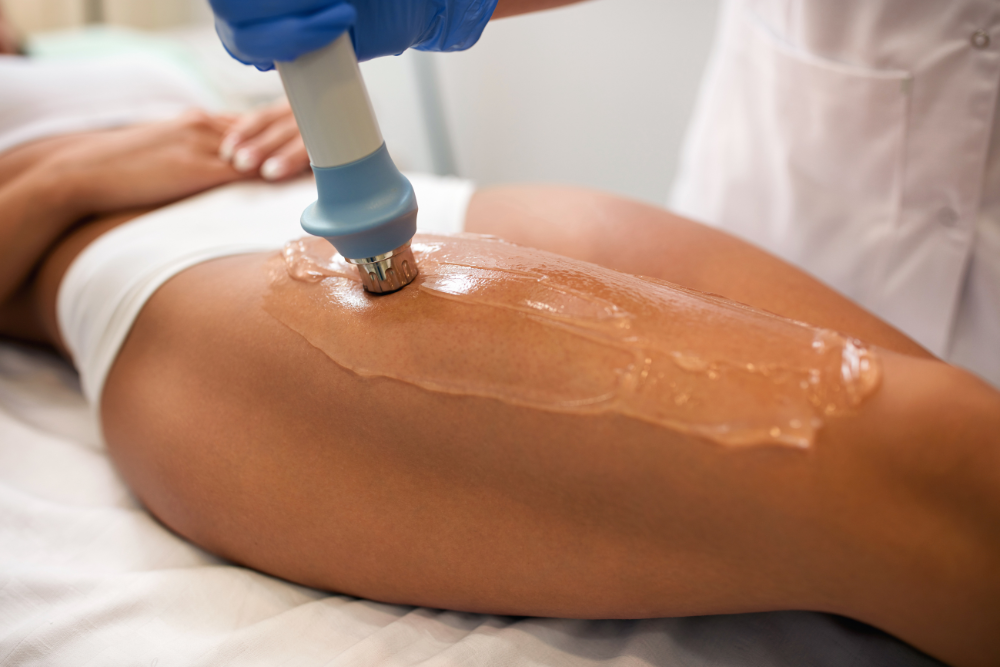
- Applying gel — a water-based gel goes on the skin so the applicator can pass the pressure waves cleanly into the tissue.
- Delivering the waves — the handpiece moves over the target area and delivers rapid pulses. Most people describe a tapping or thudding feeling, sometimes with a brief flare of their familiar tenderness.
- Adjusting as you go — the intensity is set to a level you can tolerate. It's normal for that setting to be nudged up over sessions as the area calms down and becomes less reactive.
- Finishing up — the gel is wiped off and your clinician talks you through what to do, and what to ease off, before your next visit.
The active treatment on each area usually runs only a few minutes. Some patients feel a mild, dull ache while the pulses are going; if anything feels too sharp, the settings come down. You can drive yourself home afterwards and get on with your day.
Focused Versus Radial Shockwave, in Plain Terms
You may run into two different terms, and the difference is easier to follow than it first sounds:
- Radial shockwave spreads its energy outward from the applicator tip and is strongest close to the skin's surface, thinning out as it travels deeper. It covers a broader, more superficial area, which suits a lot of common tendon and overuse complaints.
- Focused shockwave concentrates its energy so it can be aimed at a specific point at a chosen depth. That gives a more targeted delivery for certain deeper or more pinpointed problems.
Neither one is universally "better" than the other. They behave differently and fit different situations. Your clinician picks the approach and the settings based on your particular injury, how deep it sits, and how your tissue responds during assessment and treatment. Either way, the aim is the same: to prompt a healing response in tissue that has become slow to recover.
Why It's Used for Chronic, Slow-to-settle Injuries
Tendons have a fairly modest blood supply, which is part of why tendon pain can be so persistent. Once an overuse injury turns chronic, the natural repair process can stall, and rest on its own may no longer be enough to move things along. As the existing information on this page explains, the pressure waves are thought to stimulate local circulation and the body's own repair signalling. Put simply, shockwave aims to reintroduce a healing stimulus to an area that has got stuck.
That's why it's usually considered for problems that have been around for weeks or months rather than for a fresh, acute strain. It's commonly used to support recovery from heel pain such as plantar fasciitis, elbow tendon pain including tennis and golfer's elbow, and various tendon complaints around the knee, hip and shoulder. It can also be part of the plan for a stiff, painful frozen shoulder when appropriate. Results vary from one person to the next, and an assessment is the only reliable way to judge whether shockwave is a good match for your particular problem.
What a Typical Course Looks Like
Shockwave is normally given as a short series of sessions rather than a one-off visit. Many patients have a handful of treatments spaced roughly a week or so apart, though the exact number and spacing are always worked out for the individual. Your clinician settles on a plan based on the condition being treated, how long you've had it, and how the area responds as you go.
- The plan gets reviewed as you progress, and it may be adjusted if your symptoms change.
- Improvements tend to build gradually over the weeks of a course, and they can keep going after the final session as the tissue carries on responding.
- Some conditions respond more readily than others, so your clinician will give you a realistic picture at your assessment rather than a fixed promise.
If you'd like to know the cost of a course before you start, the team is glad to talk it through — just get in touch.
What to Expect After a Session
Feeling some short-term soreness, warmth or mild tenderness in the treated area for a day or two is common. It's a normal response and usually settles on its own. Your clinician will give you advice tailored to you, but the general guidance often comes down to a few things:
- Keep moving gently and go about your normal daily activities within comfort.
- Ease off high-intensity loading of the treated tendon, like heavy training or sprinting, for a short spell if you're advised to.
- Hold off on anti-inflammatory ice or medication over the area unless your clinician specifically suggests it, since the mild inflammatory response is thought to be part of how the treatment works.
- Let the clinic know if the soreness is more than you expected, so your next session can be adjusted.
Most people find the after-effects manageable and brief. If anything feels out of the ordinary, we'd always rather you check in with us.
How Shockwave Fits with Hands-on Therapy and Rehab
On its own, shockwave works on the tissue, but it doesn't retrain how you move or rebuild the strength a healing tendon needs to handle your everyday demands. That's why we pair it with the rest of your care. Depending on what you need, that might include manual therapy to loosen stiffness in nearby joints and muscles, along with a progressive loading program that gradually rebuilds the capacity of the affected tendon.
This pairing matters because lasting change usually comes from the exercise and rehab that sits alongside the treatment, not from the shockwave by itself. Think of the sessions as a way to wake the healing process back up, and the exercise program as the part that carries the improvement forward and helps lower the odds of the problem coming back. Your clinician will coach you through the exercises and adjust them as you get stronger.
Who It May Suit, and When It Isn't Appropriate
Shockwave may be worth considering if you've got a persistent tendon or overuse injury that hasn't responded well to rest and time, and you're after a non-surgical option to support your recovery. It's often a good fit for the chronic conditions listed on this page.
It isn't right for everyone, though, and there are sensible situations where we avoid it or approach it with caution. Those can include pregnancy, treatment directly over certain areas, some blood-clotting conditions or the use of blood-thinning medication, active infection or open skin over the site, certain tumours, and treating over some implants or growth plates in younger people. This is general information rather than a complete list, and it's exactly why a proper assessment comes first. At that assessment your clinician reviews your health history, confirms whether shockwave is suitable for you, and talks through the options. To arrange one, just contact our Markham clinic.
Shockwave Therapy FAQs
Does shockwave therapy hurt?
Most patients describe a tapping or thudding sensation, sometimes with a brief return of their familiar tenderness while the pulses are running. The intensity is adjustable, so your clinician keeps it at a level you can tolerate and only raises it as the area becomes less reactive. Any discomfort is usually short-lived.
How many sessions will I need?
There's no fixed number. Many people have a short series of treatments spaced about a week or so apart, but the exact plan is worked out for your condition, how long you've had it, and how you respond. Your clinician will outline a realistic plan at your assessment and review it as you progress.
When might I notice a change?
Improvements tend to build gradually over the course of treatment rather than after a single session, and they can keep developing once the course is finished. Responses differ from person to person, so your clinician will give you a candid picture for your own situation instead of a set timeframe.
Is it safe, and are there times it shouldn't be used?
Shockwave is a non-surgical, drug-free treatment, but it isn't appropriate for everyone. It's generally avoided or used with caution in circumstances such as pregnancy, certain blood-clotting conditions or blood-thinning medication, active infection or open skin over the area, and over some implants or growth plates. Suitability is always confirmed at a proper assessment.
Do I still need to do exercises if I'm having shockwave?
Yes, and this part really matters. Shockwave aims to restart the healing response, but a progressive exercise and rehab program is usually what builds lasting strength in the tendon and helps lower the chance of the problem returning. The two work together, which is why we combine shockwave with hands-on therapy and coached exercises.
Can I go back to work or training afterwards?
Most people carry on with their normal day and can drive themselves home. Feeling mild soreness for a day or two is common, and your clinician may suggest easing off heavy loading of the treated area for a short spell. You'll get guidance tailored to you at each visit.
Real results, real people
Results may not be typical; individual results may vary.
Ready to move better in Markham?
Book online or call our team — direct billing is available for most extended health plans.