Plantar Fasciitis Markham
Plantar fasciitis slowing you down in Markham? DC Chiropractic combines hands-on therapy and shockwave treatment to ease strain. Call (416) 371-9199.
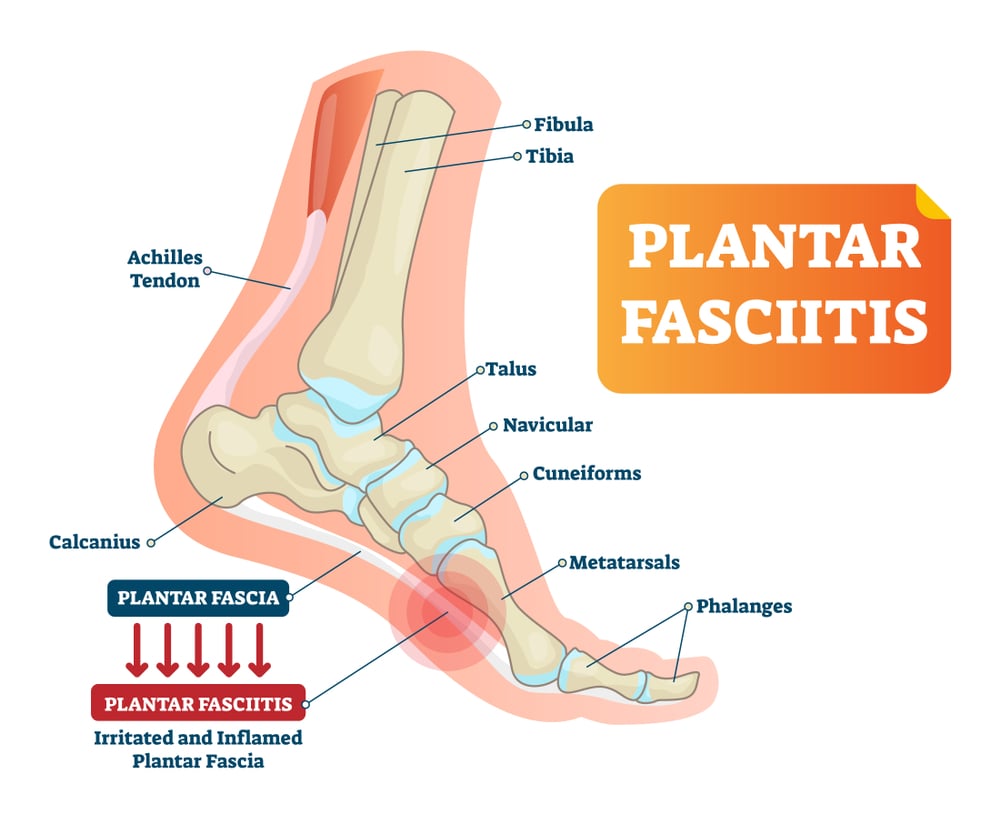
Plantar fasciitis is a chronic degenerative condition, involving microtearing of dense connective tissue located on the sole of the foot. This type of injury doesn’t occur overnight. Microtears accumulate from repetitive strains put on the foot. It is most commonly seen in patients who:
- Stand for long periods
- Run long distances
- Are sedentary or are obese
- Have flat feet
Patients who suffer from plantar fasciitis normally depict inside heel pain when weight bearing, pain during their first few steps in the morning, and experience improvement of symptoms with rest.
How we can help!
90% of patients treated conservatively have no long term reoccurrence of pain. Our treatments focus on:
- Stretching of the achilles tendon, leg musculature, plantar fascia, and intrinsic muscles of the foot
- Orthotics/footwear modifications
- Specific exercises/home care to take control of your pain
- Shockwave therapy
Understanding Why Plantar Fasciitis Develops
The plantar fascia is a thick band of connective tissue that runs along the sole of your foot, from the heel bone toward the toes. It behaves a bit like a bowstring, holding up the arch and helping absorb and return energy as you walk. Problems start when you ask more of that tissue than it can recover from. Small areas of strain build up near the spot where the fascia attaches to the heel, and over weeks that repeated overload turns into the inside-heel pain a lot of people in Markham first notice as a sharp jab during their first steps out of bed.
It usually makes more sense to treat plantar fasciitis as a load problem than as a single injury. One dramatic event rarely damages the tissue. What matters is the total amount of stress it absorbs over weeks and months, and a handful of things quietly push that total higher:
- Sudden increases in activity. Ramping up running distance, starting a new fitness routine, taking on a job that involves more walking, or a busy stretch of home renovations can all push loading up faster than the fascia adapts.
- Calf and Achilles tightness. When the calf muscles and Achilles tendon are stiff, the ankle cannot bend as freely, so more strain gets passed forward into the fascia with each step. It is also one of the factors you can most readily change.
- Footwear that offers little support. Worn-out shoes, very flat or unsupportive footwear, and long stretches spent barefoot on hard floors can all increase the demand on the arch.
- Occupation and standing time. Nurses, teachers, retail and warehouse staff, and anyone on their feet on hard surfaces for long shifts place sustained load on the fascia throughout the day.
- Foot structure and mechanics. Flat feet, high arches, and the way weight moves through the foot can each change how load is distributed.
- Body weight and general conditioning. Higher loads through the foot and reduced tissue tolerance can both play a part.
Most people have more than one of these in play at once. That is why care aimed only at the sore heel, without also looking at the calf, the footwear, and the overall loading pattern, so often falls short.
How the Clinic Assesses Plantar Fasciitis
Not every sore heel is plantar fasciitis, so a good assessment does two jobs: it confirms what is driving your symptoms and it helps rule out other sources of heel pain. During an individual assessment at our Markham clinic, your practitioner will usually ask about your pain pattern, those first morning steps, and how the symptoms respond to rest and activity. The physical examination may include:
- History and daily load review — a look at your work, footwear, exercise habits, and any recent changes that could have tipped loading past your tolerance.
- Palpation — gently checking where the tenderness sits, most often at the inner edge of the heel where the fascia attaches.
- Calf and ankle mobility testing — assessing how much your ankle bends and how tight the calf and Achilles are.
- Foot and lower-limb mechanics — observing your arch, standing posture, and how you walk to understand how load moves through the foot.
- Strength and movement screening — checking the foot, ankle, and hip, since weakness further up the chain can change how the foot is loaded.
The point is to end up with a picture that fits you specifically, so the plan targets your own contributing factors instead of following a generic recipe. If something in the assessment points to a different cause, your practitioner can talk through whether further investigation or a referral makes sense.
Why the Treatment Elements Work Together
Plantar fasciitis usually responds best to a mix of measures, each aimed at a different part of the problem. No single one carries the whole load, which is exactly why a coordinated plan matters. Our physiotherapy team in Markham generally builds a program that layers a few complementary pieces:
- Stretching of the calf, Achilles, and plantar fascia can ease the stiffness that pushes extra strain into the heel.
- Strengthening of the calf and the small intrinsic muscles of the foot is designed to build the tissue's capacity, so it tolerates load better over time rather than only being stretched.
- Load management temporarily dials back the aggravating activities while keeping you moving, which gives irritated tissue a chance to settle without letting you decondition.
- Footwear and orthotic support can reduce day-to-day strain on the arch, which is especially useful for people who stand for long shifts.
- Shockwave therapy may be added for stubborn cases that have not settled with the above.
Why the combination tends to beat any single measure comes down to coverage. Each piece answers a different contributor: stretching for tightness, strengthening for capacity, load management for how much you are asking of the foot, and footwear for the mechanical stress every step puts on the arch. Treat one and ignore the rest, and you often leave a contributor still active, which is a common reason heel pain drags on. Used together and adjusted as you go, the pieces back each other up.
How Shockwave Therapy Fits In
When heel pain has been around for several months and has not responded to conservative care, shockwave therapy is one option your practitioner may raise. It sends focused acoustic pressure waves through the skin to the affected tissue, aiming to nudge the body's local healing response back into gear in an area that has stalled. It is usually delivered over a short series of sessions and sits inside the wider program rather than replacing it, so the stretching, strengthening, and load management carry on alongside it. Whether it is a fit for you depends on your history and assessment findings, and that is best reviewed one to one.
A Realistic Recovery Timeline
Because the fascia gets overloaded gradually, it tends to recover on a similar timescale. Many people find that improvement is slow and measured in weeks to several months rather than days. Progress is often uneven too, with good stretches interrupted by the occasional flare after a busy or high-load day. That is normal, and it does not mean the plan has failed.
Consistency is usually what moves things along. Home exercises done most days, sensible footwear worn as a habit, and steady load management tend to produce more reliable progress than a hard push followed by long gaps. Patience helps here, because tissue capacity is built slowly. Your practitioner can help you track the signs that actually matter, such as easier first steps in the morning or longer standing tolerance, and adjust the program as your foot handles more.
Day-to-Day Self-Care and Prevention
Alongside your in-clinic program, a few small daily habits can support recovery and help lower the chance of it coming back:
- Choose supportive footwear and replace shoes as they wear out; be cautious with long barefoot stretches on hard floors.
- Warm up the foot in the morning with gentle calf and fascia stretches before your first weight-bearing steps.
- Increase activity gradually. When returning to running, walking, or standing work, build up in steps rather than jumping back to previous volumes.
- Keep the calf and foot mobile with the stretches and strengthening your practitioner prescribes.
- Manage standing time where you can, with brief movement breaks and supportive surfaces or mats during long shifts.
If your heel pain is not improving, or you are also dealing with related complaints such as knee pain or back pain that may be affecting how you move, an individual assessment can help clarify what is going on. You can review your options and ask about pricing when you contact our Markham clinic to book.
Plantar Fasciitis FAQs
Why does my heel hurt most with my first steps in the morning?
Overnight the fascia rests in a shortened position, so the first weight-bearing steps suddenly load and stretch tissue that is already irritated. Many people feel that as a sharp pain that eases once they warm up. A short morning routine of gentle calf and fascia stretches before you stand may help take the edge off those first steps.
How long does plantar fasciitis take to settle?
It varies from person to person, and many people find recovery is gradual, measured in weeks to several months rather than days. Progress can be uneven, with occasional flares after high-load days. Consistency with your exercises, footwear, and load management tends to support steadier progress. An individual assessment can give you a more specific picture.
Do I need shockwave therapy for plantar fasciitis?
Not necessarily. Many cases respond to conservative care such as stretching, strengthening, load management, and footwear support. Shockwave therapy is one option your practitioner may discuss for stubborn cases that have not settled with those measures over time. Whether it suits you depends on your history and assessment.
Should I stop walking or exercising completely?
Usually not. The aim is to manage load rather than remove it entirely, so irritated tissue can settle while you stay active and avoid deconditioning. Your practitioner can help you adjust volume and intensity and guide a gradual return to your activities.
Can my footwear really make a difference?
Footwear affects how much strain reaches the arch with each step, so supportive shoes and, in some cases, orthotic support can be a helpful part of a plan, particularly for people who stand for long shifts. Your practitioner can advise on what suits your foot rather than recommending a single brand.
What can I expect at a first appointment?
Your practitioner will usually review your history, work and footwear, and how your pain behaves, then examine your heel, your calf and ankle mobility, and how you move. From there they can outline a plan tailored to your contributing factors. You are welcome to contact our Markham clinic with any questions before booking.
Real results, real people
Results may not be typical; individual results may vary.
Ready to move better in Markham?
Book online or call our team — direct billing is available for most extended health plans.